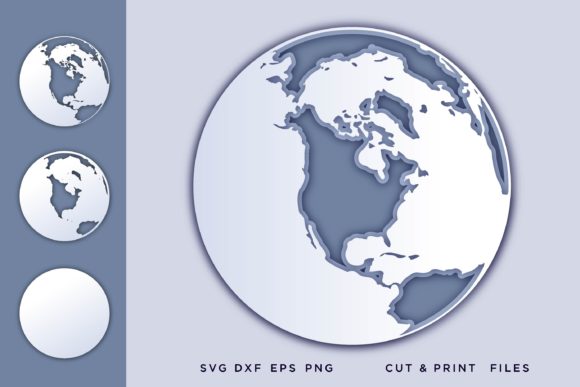
Unlocking Precision: A Practical Guide to Layered Earth 3D Digital Assets
In the evolving landscape of digital fabrication and graphic design, the demand for high-fidelity topographical assets has surged. Whether you are a professional educator creating tactile learning tools, an entrepreneur launching a line of custom home decor, or a hobbyist exploring the capabilities of your cutting machine, the quality of your source files dictates the success of your final product. The Layered Earth 3D digital collection represents a specific category of vector resources designed to bridge the gap between complex geographical data and user-friendly manufacturing. Unlike standard clip art or low-resolution images, these assets are engineered for precision, offering a robust foundation for projects that require depth, accuracy, and scalability.
Understanding the value of this instant digital download requires looking beyond the visual appeal of a mountain range or a terrain map. It is about evaluating the technical specifications that allow creators to manipulate these designs without compromising integrity. When you acquire a set like this, you are not buying a physical object that will be shipped to your door; you are investing in a versatile toolkit contained within a zipped folder. This shift from physical to digital inventory offers immediate access, eliminating shipping delays and allowing for rapid iteration in your workflow. However, the true utility lies in the file formats provided and how they integrate into your existing software ecosystem.
The Technical Foundation: Vector Versatility and Resolution
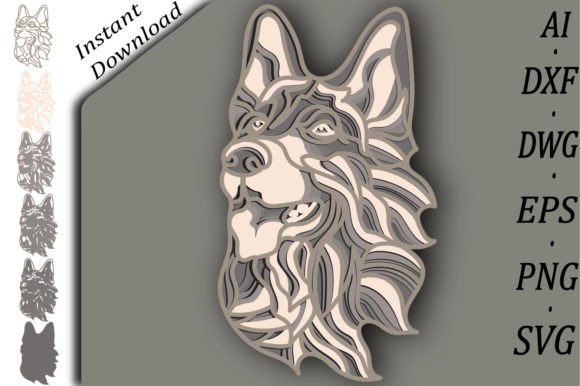
The core strength of the Layered Earth 3D asset pack lies in its multi-format delivery system. Professional creators know that one size rarely fits all when it comes to digital fabrication. This collection addresses that need by providing four distinct file formats: SVG, EPS, DXF, and PNG. Each serves a critical function depending on your intended application and the machinery you utilize.
SVG (Scalable Vector Graphics) files are arguably the most vital for modern crafters using machines like the Cricut or Silhouette. Because they are vector-based, they rely on mathematical paths rather than pixels. This means you can resize a Layered Earth 3D design from a small sticker to a large wall mural without any loss of quality. There is no pixelation, no blurring, and no jagged edges, regardless of the scale. For users of Silhouette Studio (both Designer and Basic editions) and Cricut Design Space, these files offer seamless compatibility, ensuring that the cut lines correspond exactly to the visual design.
For those working in more traditional or industrial design environments, the inclusion of EPS (Encapsulated PostScript) and DXF (Drawing Exchange Format) files is significant. EPS remains a gold standard for print professionals using Adobe Illustrator or CorelDraw, allowing for advanced editing of anchor points and bezier curves. DXF files, on the other hand, are essential for CAD software and specific cutting plotters like Brother's ScanNCut Canvas or specialized laser cutters. By offering unlimited resizing with no quality loss across these vector formats, the asset pack ensures that your project constraints are defined only by your material size, not by the resolution of your digital file.
Rounding out the suite are PNG (Portable Network Graphics) files rendered at 300ppi with a transparent background. While vectors are superior for cutting, raster images are often necessary for sublimation printing, digital mockups, or web presentation. A resolution of 300ppi is the industry standard for high-quality printing, ensuring that if you choose to print the terrain map directly onto paper or fabric, the details remain crisp. The transparent background is a crucial feature here, allowing you to overlay the earth layers onto different colored backgrounds or composite them into larger designs without unsightly white boxes surrounding the image.
Real-World Applications and Workflow Integration
The practical value of Layered Earth 3D becomes most apparent when analyzing its application in real-world scenarios. For educators, particularly those teaching geography, geology, or environmental science, these files offer a way to create engaging, tactile learning aids. By using the layered nature of the SVG files, a teacher can cut multiple layers of cardstock or foam board, stacking them to create a physical 3D topographical map. This hands-on approach helps students visualize elevation changes and landforms far better than a flat textbook image could. The consistency of the cut files ensures that each layer aligns perfectly, resulting in a professional-looking educational tool.
Entrepreneurs and small business owners in the home decor sector can also leverage these assets effectively. The trend of wooden topographical maps and layered wall art is significant in interior design markets. With the DXF and SVG files, a business owner can feed hardwood, acrylic, or MDF sheets into a laser cutter or CNC machine to produce sellable goods. The reliability of the vector paths means less time spent fixing broken nodes or correcting cut errors, leading to higher production efficiency and less material waste. Since the files come with original images free of watermarks and backgrounds, the end product is clean and ready for finishing, staining, or painting.
Freelance graphic designers and marketers will find the flexibility of these files equally beneficial. When creating branding materials for outdoor companies, travel agencies, or conservation groups, having access to high-quality terrain graphics allows for unique visual storytelling. The ability to edit the vectors in Adobe Illustrator means you can recolor the layers to match a specific brand palette or simplify the geometry for a more stylized look. This adaptability makes the Layered Earth 3D pack a long-term asset rather than a one-time use graphic.
Usability and Software Compatibility
A common concern for buyers of digital assets is whether the files will actually work with their specific setup. This collection is explicitly guaranteed to work with a wide array of vector-compatible software. If you are using Silhouette Studio, Cricut Design Space, or Sure Cuts A Lot, the import process is generally straightforward. The files are structured to minimize the need for complex cleanup upon import. However, it is important to note that a basic knowledge of your chosen software is assumed. These are professional-grade tools, not automated wizards. Users should understand how to ungroup elements, adjust cut settings, and manage layers within their specific program to get the best results.
The delivery method—an instant digital download in a zipped folder—streamlines the acquisition process. Upon purchase, there is no waiting period. You can unzip the folder and immediately begin exploring the contents. This immediacy is particularly valuable for professionals working under tight deadlines. However, it also places the responsibility of file management on the user. Organizing these assets into a logical library system is recommended to ensure you can locate specific regions or styles quickly in the future.
Evaluating Limitations and User Expectations
While the Layered Earth 3D asset pack offers substantial benefits, a balanced evaluation requires acknowledging its limitations and the expectations placed on the user. First and foremost, this is a digital product; no physical items will be shipped. This distinction is vital for those accustomed to purchasing ready-made crafts. You are purchasing the potential to create, not the creation itself. This requires access to hardware such as cutting machines, printers, or laser engravers, as well as the necessary materials like vinyl, wood, or paper.
Furthermore, the "layered" aspect implies complexity. To achieve the 3D effect, the user must understand how to stack materials and adhere layers correctly. The files provide the shapes, but the assembly technique—gluing, spacing, and finishing—is up to the creator. For beginners, there may be a learning curve associated with translating a 2D screen design into a 3D physical object. Additionally, while the files are compatible with major software, slight variations in how different programs interpret SVG or DXF paths can occur. It is always prudent to perform a test cut on scrap material before committing to expensive media.
Another consideration is the scope of the geographical data. These are stylized representations designed for aesthetic and functional clarity rather than scientific survey-grade accuracy. While they effectively convey topographical concepts, they may not possess the granular detail required for rigorous scientific analysis or precise engineering applications. They are optimized for visual impact and manufacturability.
Long-Term Value and Investment Potential
When assessing the long-term value of the Layered Earth 3D download, the concept of "unlimited resizing" plays a pivotal role. In the world of digital assets, scalability equates to longevity. A raster image bought today might be obsolete tomorrow if you need to print it larger than its original resolution allowed. Vector files, however, remain perpetually useful. As your business grows or your projects become more ambitious, these files grow with you. You can repurpose the same design for a business card today and a billboard next year without needing to repurchase a higher-resolution version.
The diversity of the file formats also future-proofs your investment. Should you upgrade your software from a basic edition to a professional suite, or switch from a Cricut to a laser cutter, the EPS and DXF files ensure you are not locked out of using your assets. This flexibility reduces the risk of obsolescence and maximizes the return on investment for freelancers and business owners who need to adapt quickly to changing market demands or technology upgrades.
In conclusion, the Layered Earth 3D digital collection is a robust resource for anyone looking to incorporate topographical elements into their creative or commercial projects. Its strength lies not just in the visual design, but in the technical rigor of its file delivery. By providing high-resolution PNGs alongside scalable SVG, EPS, and DXF vectors, it caters to a broad spectrum of workflows from casual crafting to professional manufacturing. While it demands a degree of technical proficiency and access to fabrication tools, the payoff is a high degree of creative control and professional-quality output. For educators, makers, and designers willing to engage with the material, this asset pack offers a reliable, flexible, and enduring foundation for bringing the contours of the earth to life in three dimensions.