Elevating Home Ambiance with the Spiral Candelabrum 3D Printing Candle Holder
The intersection of digital fabrication and interior design has opened new avenues for personal expression, allowing individuals to curate their living spaces with items that are both functional and artistically unique. At the forefront of this movement is the Spiral Candelabrum 3D Printing Candle Ho, a design that exemplifies how modern technology can revitalize traditional home decor elements. This specific model is not merely a container for wax; it is a testament to the precision and creative freedom offered by additive manufacturing. For homeowners, hobbyists, and design professionals alike, understanding the nuances of such a piece reveals broader shifts in how we approach craftsmanship, material efficiency, and aesthetic customization in the modern era.
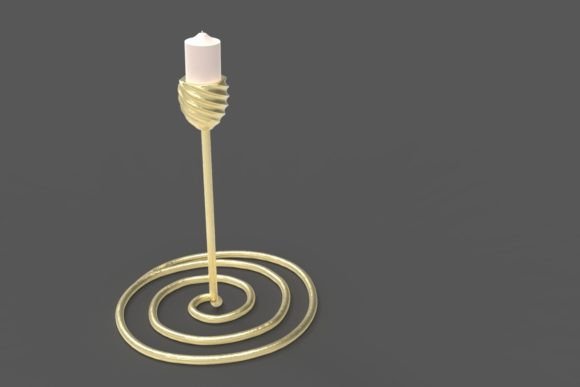
The appeal of the spiral candelabrum lies in its geometry. The helical structure is visually dynamic, drawing the eye upward and creating a sense of movement even when the object is stationary. When illuminated by candlelight, the shadows cast by the spiral ridges add depth and texture to a room, transforming a simple light source into an atmospheric feature. Unlike mass-produced decor items that often lack character or require expensive molding processes to achieve complex shapes, this design leverages the layer-by-layer nature of 3D printing to create forms that would be difficult or cost-prohibitive to manufacture using traditional subtractive methods.
Design Efficiency and Material Intelligence
In the realm of 3D printing, good design is synonymous with efficient design. The creator of this spiral candelabrum has carefully engineered the model to balance structural integrity with material conservation. A standout feature of this file is the hollow internal structure. By designing the holder with a void inside, the amount of filament required is significantly reduced without compromising the object's stability. This approach reflects a growing consciousness among makers and consumers regarding resource usage and sustainability.
The technical specifications are tailored for reliability. The wall thickness is set between 2 to 3 mm, a range that provides sufficient durability to withstand the heat of a burning candle and the physical handling involved in cleaning or moving the piece. Walls that are too thin might warp under heat or feel fragile, while excessively thick walls waste material and increase print time unnecessarily. This "Goldilocks" zone of 2-3 mm ensures the final product feels substantial and premium, akin to ceramic or turned wood, while maintaining the lightweight advantages of printed polymers.
Furthermore, the design accommodates standard lighting needs. The widest candle holes feature a diameter of 20 mm, which aligns perfectly with standard pillar candles widely available in retail stores. This attention to real-world usability is crucial. A beautiful design that requires custom-made candles is impractical for daily use. By adhering to the 20 mm standard, the designer ensures that the user can easily find replacements, making the candelabrum a practical addition to dining tables, mantels, or meditation spaces. The preview files, which display all dimensions in millimeters, offer transparency, allowing users to verify fit and scale before committing to a print or purchase.
The Shift Toward Digital Craftsmanship
The popularity of files like the Spiral Candelabrum 3D Printing Candle Holder signals a significant evolution in consumer behavior and creative workflows. We are witnessing a transition from passive consumption to active creation. In the past, if a consumer wanted a unique candle holder, their options were limited to high-end artisan markets or expensive custom commissions. Today, the barrier to entry has lowered dramatically. With access to STL and OBJ files, individuals with a 3D printer can produce high-quality decor in their own homes.
This shift empowers a diverse audience, ranging from freelance designers and educators to small business owners and DIY enthusiasts. For entrepreneurs, this represents an opportunity for micro-manufacturing. One can purchase the digital archive, print multiple units in various colors or materials, and sell them as bespoke home goods. The ability to iterate quickly means that a seller can test different colorways—perhaps a matte black for a modern look or a translucent gold for a vintage vibe—without the overhead of inventory storage or tooling costs.
Moreover, this trend aligns with the increasing demand for personalized environments. As people spend more time working and living within their homes, the desire for spaces that reflect individual taste has intensified. Generic, big-box store items often fail to satisfy this need for uniqueness. A 3D-printed spiral candelabrum offers a conversation piece that carries the story of its creation. It bridges the gap between digital art and physical utility, appealing to those who appreciate the synergy of technology and tradition.
Practical Implications for Makers and Users
For the end-user or the maker looking to print this design, the practical benefits extend beyond aesthetics. The availability of the design in both OBJ and STL formats ensures compatibility with a wide array of slicing software and 3D modeling tools. Whether one uses Cura, PrusaSlicer, or professional CAD software, the file readiness reduces friction in the workflow. This accessibility is vital for educators introducing students to digital fabrication, as it allows them to focus on the printing process and post-processing techniques rather than struggling with file conversion or repair.
When considering the printing process, the hollow design also influences print settings. Users can optimize infill patterns, knowing that the outer shell provides the primary structural support. This allows for faster print times and lower energy consumption. For businesses, this efficiency translates to better margins and the ability to fulfill orders more rapidly. For hobbyists, it means less waiting time and more opportunities to experiment with different filaments, such as wood-filled composites that mimic the look of carved timber or marble-effect plastics that simulate stone.
It is also worth noting the safety considerations inherent in combining 3D printed materials with open flames. While the 2-3 mm wall thickness provides a buffer, users should always exercise caution. Placing the candle holder on a heat-resistant surface and ensuring the candle fits snugly within the 20 mm hole prevents tipping and minimizes direct heat transfer to the plastic base. Responsible usage ensures that the beauty of the spiral design can be enjoyed safely over countless evenings.
Future Trends in Decorative Manufacturing
The success of models like the spiral candelabrum points toward a future where digital files become as valuable as physical goods. We are moving toward an economy where value is derived from design intelligence and community sharing. Platforms hosting these files foster a global community of creators who refine, remix, and improve upon existing designs. The spiral candelabrum may serve as a base for further innovation; a designer might modify the height, alter the pitch of the spiral, or integrate LED channels for flameless operation, demonstrating the iterative potential of open digital design.
Furthermore, as 3D printing technology becomes more accessible and materials more advanced, the line between "printed" and "crafted" will continue to blur. High-resolution printers and specialized filaments are already producing objects with surface finishes that rival injection-molded parts. The spiral candelabrum stands as a current example of this capability, offering a refined product that meets high aesthetic standards while utilizing a decentralized production method.
In conclusion, the Spiral Candelabrum 3D Printing Candle Ho is more than just a downloadable file; it is a representation of the changing landscape of home decor and manufacturing. It combines thoughtful engineering—evident in its hollow construction and precise dimensions—with an elegant form that enhances any interior space. Whether you are a professional designer seeking unique assets, a business owner exploring on-demand production, or a homeowner looking to add a touch of modern elegance to your table, this design offers a compelling blend of form, function, and forward-thinking utility. By embracing such innovations, we participate in a broader cultural shift towards smarter, more sustainable, and highly personalized living environments.