Understanding the 3D Violin SVG Cut File: A Practical Guide to Layered Musical Decor
For crafters and designers working with digital cutting machines, the transition from flat silhouettes to dimensional art represents a significant evolution in project complexity and visual impact. The 3D Violin SVG Cut File 5 Layers Deco exemplifies this shift, offering a specialized resource for creating intricate musical-themed decorations. Unlike standard single-layer vectors that produce a simple outline, this file type is engineered specifically for layering, allowing users to build depth and shadow effects using materials like wood, acrylic, or cardstock. Understanding the mechanics, benefits, and limitations of such multi-layered files is essential for anyone evaluating whether this approach fits their current workflow and material capabilities.
The Mechanics of Multi-Layered Vector Design
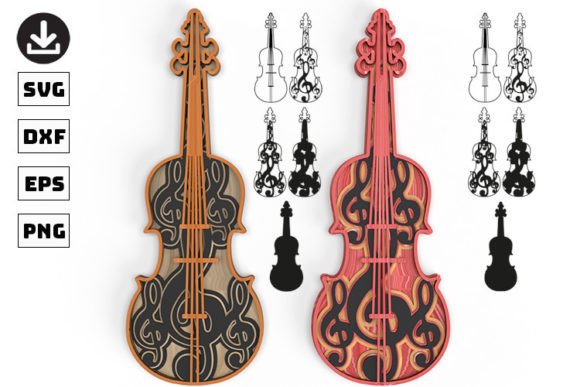
At its core, a 5-layer deco file functions differently than a traditional cut file. When you download a package containing formats such as SVG, EPS, DXF, PNG, and PDF, you are receiving a suite of tools designed for interoperability across various software platforms like Cricut Design Space, Silhouette Studio, Adobe Illustrator, and CorelDRAW. The "5 layers" designation indicates that the violin design is segmented into five distinct parts. In a physical application, these parts are stacked upon one another, often with slight offsets or varying material thicknesses, to create a three-dimensional illusion.
This segmentation requires precise alignment during the design phase, which is why files created in professional environments using Illustrator or Photoshop are highly valued. A well-tested file ensures that the registration points align perfectly when cut. For the end-user, this means less time troubleshooting misaligned cuts and more time assembling the final piece. The inclusion of multiple file formats adds versatility; for instance, DXF is often preferred for older cutting machines or specific CNC setups, while SVG remains the industry standard for web-based cutting software. The presence of a transparent PNG allows for immediate use in sublimation or digital mockups without needing to vectorize the image manually.
Evaluating Material Compatibility and Application
One of the primary decision factors when choosing a 3D layered file is material compatibility. The 3D Violin SVG Cut File 5 Layers Deco is marketed as suitable for a wide range of substrates, including wood, metal, paper, cardboard, and plywood. However, the practical application varies significantly depending on the chosen medium.
- Wood and Plywood: This is arguably the most popular application for 5-layer designs. Using 3mm or 6mm plywood, crafters can stack the layers to create a substantial, freestanding sign or wall hanging. The natural grain of the wood adds texture that enhances the 3D effect. However, users must account for kerf (the width of the cut made by the laser or blade) to ensure tight fitting.
- Paper and Cardboard: Ideal for greeting cards, scrapbooking, or lightweight party decor. Paper layering allows for color variation between layers, creating a shadow-box effect without the weight of wood. The precision required here is higher, as tearing can occur if the design details are too fine for the paper weight.
- Metal and Acrylic: These materials offer a modern, sleek aesthetic but require different cutting tools, often necessitating a CNC machine or a high-force die cutter. The rigidity of these materials makes them excellent for durable signage but limits the ability to curve or bend the layers for organic shapes.
It is crucial to recognize that while a file may be technically compatible with these materials, the success of the project often depends on the user's equipment calibration. A file tested on a Cricut machine provides a baseline for quality, ensuring that the paths are closed and nodes are optimized for consumer-grade cutters. Yet, when moving to industrial CNC routers or laser cutters, additional adjustments to line weights and power settings may be necessary.
Comparative Analysis: 3D Layered Files vs. Single-Layer Alternatives
When researching design resources, crafters often weigh the pros and cons of complex layered files against simpler single-layer alternatives. The 3D Violin SVG Cut File 5 Layers Deco offers distinct advantages in terms of visual depth and perceived value. A finished 5-layer violin sign commands more attention and looks more professional than a flat sticker or decal. It transforms a simple icon into a piece of art.
However, this comes with tradeoffs. Single-layer files are faster to cut, easier to weed (remove excess material), and require no assembly beyond application. They are ideal for high-volume production or projects where speed is the priority. In contrast, a 5-layer project multiplies the cutting time by five and introduces an assembly phase that requires patience and precision. For a beginner, the complexity of aligning five separate pieces can be daunting. If the layers are not glued or fastened correctly, the final image may look distorted.
Furthermore, the cost of materials is higher for 3D projects. Creating one finished violin sign requires five times the surface area of material compared to a single-layer version. Users must evaluate whether the enhanced aesthetic justifies the increased consumption of resources and time. For commercial sellers, this calculation is vital; while 3D items can sell for a higher price point, the labor hours involved reduce the profit margin per unit unless the process is streamlined.
Digital Delivery and Technical Support Considerations
In the realm of digital products, the transaction is purely virtual. Purchasing a 3D Violin SVG Cut File means downloading a ZIP file rather than receiving a physical object. This immediacy is a benefit for those who need a design instantly, but it also places the responsibility of file management on the buyer. Users must be comfortable unzipping archives, locating specific file extensions (like .EPS for vector editing or .PDF for printing), and importing them into their respective software.
A critical aspect of evaluating any digital design seller is the level of support offered. Even with files that have been rigorously tested, variables such as software updates, machine firmware differences, or user error can lead to issues. A reputable provider will offer assistance if a file fails to open or if the cut results are unsatisfactory. Knowing that a designer is available to correct problems or provide alternative versions (such as the mentioned "2 different back" options) adds a layer of security to the purchase. This support structure is particularly important for complex files where a minor node error can ruin an entire sheet of expensive material.
Decision Factors: Is This File Right for Your Project?
Ultimately, deciding to utilize the 3D Violin SVG Cut File 5 Layers Deco depends on your specific goals, skill level, and available tools. This resource is an excellent choice if:
- You possess a cutting machine capable of handling intricate details and have experience with material settings.
- You are aiming to create a high-end decorative piece where depth and shadow are desired aesthetic qualities.
- You have access to appropriate adhesives and assembly space to manage multiple layers.
- You value having multiple file formats to ensure compatibility across different devices and software.
Conversely, this may not be the optimal solution if you are looking for a quick, single-pass cut for a large batch of items, or if you are entirely new to vector files and assembly processes. In such cases, starting with a simpler, single-layer design might be a more prudent step to build confidence and technique.
The versatility of the file formats included—ranging from the scalable nature of SVG and EPS to the universal compatibility of PNG and PDF—ensures that the design can adapt to various creative workflows. Whether the end goal is a rustic wooden wall hanging for a music studio, a sophisticated paper invitation for a concert, or a custom metal plaque, the underlying vector data provides a robust foundation. By understanding the requirements of layered construction and the nuances of digital file usage, crafters can make informed decisions that lead to successful, professional-quality outcomes.