Mountain Hiker 3D Shadow Box: A Layered Adventure
Hello, crafters. If you have been searching for a project that bridges the gap between traditional papercraft and modern digital design, this layered, square paper cutting template of the Mountain Hiker 3D Shadow Box Paper Cut is exactly what your creative toolkit needs. This isn't just a static image; it is a dimensional experience. The design captures the rugged serenity of high-altitude trekking, utilizing eight distinct layers to create depth, shadow, and a tangible sense of journey. Whether you are a hobbyist looking for a weekend project or a small business owner creating unique inventory for an outdoor gear shop, this template offers a versatile foundation for storytelling through paper.
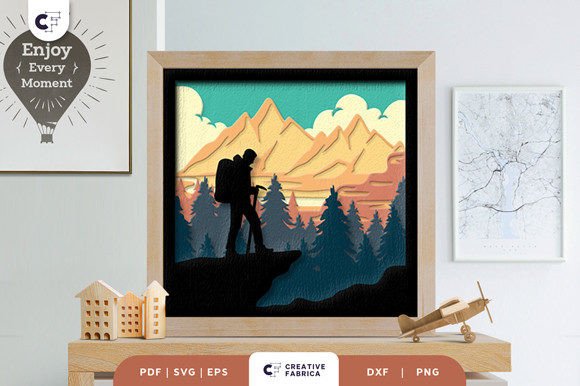
The visual characteristics of this piece rely heavily on the interplay of light and negative space. Unlike a flat illustration, the Mountain Hiker 3D Shadow Box Paper Cut demands attention through its physical presence. The silhouette of the hiker, set against a backdrop of jagged peaks and rolling clouds, creates a narrative of exploration without saying a word. The style is clean yet intricate, balancing large open areas with fine details that challenge your cutting skills just enough to keep things interesting. When assembled, the personality of the piece shifts depending on your material choice. Using the recommended Encore Cardstock 80 lb cover (216 gsm) provides the structural integrity needed to hold the layers apart, ensuring the shadows cast are deep and defined. This weight of paper prevents warping and gives the final product a premium, gallery-ready feel.
From Digital File to Tangible Brand Asset
While many creators view SVG files strictly as inputs for cutting machines like Silhouette or Cricut, there is a broader application here for designers and marketers. The Mountain Hiker 3D Shadow Box Paper Cut serves as an excellent case study in how dimensional design influences brand perception. In the world of branding, consistency and recognition are key. A flat logo on a website is standard, but a physical, layered representation of that brand identity in a retail space or at a trade show can drastically increase audience engagement. Imagine a travel agency or an outdoor apparel brand using this specific aesthetic in their window displays. The depth created by the eight layers mimics the topography of a map, subtly reinforcing themes of navigation, adventure, and overcoming obstacles.
This template works exceptionally well across various sectors, including editorial design, packaging design, and even web design mockups. For publishers, the concept of layering can be translated into digital interfaces where parallax scrolling creates a similar feeling of depth. For physical products, the square format (20.32×20.32 cm) fits perfectly into standard framing options, making it an ideal candidate for limited edition prints or corporate gifts. The appeal lies in its versatility; it is neither too abstract nor too literal. It strikes a balance that allows viewers to project their own aspirations onto the hiker figure. This emotional connection is what separates a generic decoration from a meaningful brand touchpoint.
When considering where this design fits best, think about environments that benefit from texture. In a sterile office setting, a 3D shadow box adds warmth and human effort. In a retail context, it acts as a focal point that draws the eye away from digital screens and back to the physical world. The "personality" of the cut is one of resilience and calm. It suggests that the journey is just as important as the destination. For entrepreneurs, leveraging this sentiment in your visual marketing can help align your brand with values of perseverance and natural beauty. It is a subtle form of communication that often resonates more deeply than bold, sales-heavy graphics.
Technical Execution and Material Selection
Executing this design requires a bit of planning, but the process is straightforward if you respect the materials. You will receive the template in multiple formats—SVG, PDF, EPS, PNG, and DXF—ensuring compatibility with almost any workflow. If you are using a cutting machine, the SVG file is your go-to. It allows you to resize the design, provided you maintain the aspect ratio to prevent distortion of the hiker and mountain proportions. However, do not underestimate the value of manual crafting. If you do not have a machine, an art knife and a steady hand work beautifully, especially when working with the specified 216 gsm cardstock. This thickness is crucial; anything lighter might buckle under the tension of assembly or fail to cast a sufficient shadow.
Assembly is where the magic happens. You will need glue or double-sided tape to adhere the layers. The key here is spacing. To achieve the true 3D effect, consider using foam adhesive squares between the layers rather than flat glue. This elevates each successive layer, enhancing the shadow play. For those looking to push the design further, transforming this into a light box is a fantastic option. By inserting LED strips between the layers, you change the entire mood of the piece. The light filters through the cutouts, highlighting the contours of the mountains and the silhouette of the hiker. This variation turns a wall decoration into an ambient lighting fixture, perfect for nurseries, reading nooks, or cozy cabin interiors.
It is important to note that while the digital preview gives you a good idea of the layout, the actual final product color may slightly vary due to lighting sources and the specific paper color you choose. This variability is actually a feature, not a bug. It allows you to customize the piece to match specific brand colors or interior design schemes. For instance, using cool blues and greys evokes a winter climb, while warm oranges and browns suggest an autumn hike. This adaptability makes the Mountain Hiker 3D Shadow Box Paper Cut a robust asset for custom orders. You can visit the 12×12 Cardstock Shop to source the recommended Encore Cardstock, ensuring you have the right foundation for your project. This is a paid link at no extra cost to you, but it guarantees you are working with materials that behave predictably during the cutting and gluing process.
Design Observations and Professional Recommendations
From a professional standpoint, the success of a project like this hinges on patience and precision. When evaluating project fit, consider the end-user's environment. Will this be viewed from afar, or will people interact with it up close? If it is the latter, ensure your cuts are clean and your glue application is invisible. Stray fibers or visible adhesive can detract from the professional finish. For designers testing font pairings or other graphic elements to accompany this piece (perhaps on a backing board or within a larger layout), stick to clean sans serif fonts that do not compete with the intricate details of the paper cut. The goal is to let the typography support the imagery, not overpower it.
Commercial licensing is another critical factor for small business owners. Since this is a template intended for creation, understanding the boundaries of use is vital. Whether you are selling the finished framed pieces or using the design for client work, clarity on usage rights protects your business. Always review the specific license terms included with your download. Furthermore, when scaling this design for larger installations, remember that the number of layers remains constant at eight. If you significantly increase the size, you may need to adjust the paper weight to maintain structural rigidity. Heavier board might be required for large-format shadow boxes to prevent sagging over time.
Ultimately, the Mountain Hiker 3D Shadow Box Paper Cut is more than just a craft project; it is a lesson in depth, perspective, and materiality. It reminds us that in design, as in hiking, the layers we build up define the view we eventually get. Whether you are framing this for a loved one, integrating it into a product launch, or simply enjoying the meditative process of cutting and assembling, the result is a testament to the power of handmade quality in a digital age. Take your time with the layers, experiment with your lighting, and let the shadows tell the story of the climb.