Evaluating 3D Layered Surf, Sea Wave, and Flip Flop SVG Designs for Modern Home Decor
The rise of accessible digital fabrication tools has transformed how enthusiasts approach home decor, shifting the focus from purchasing finished goods to creating personalized art. Among the most popular trends in this space are coastal-themed projects, specifically those utilizing 3D layered surf, sea wave, and flip flop SVG files. These designs offer a distinct aesthetic that combines the nostalgia of beach culture with the tactile depth of physical layering. For adults exploring options for their workshops—whether equipped with a Glowforge, a standard CO2 laser, a CNC router, or even a cutting machine like a Cricut—understanding the nuances of these specific file types is essential for successful project execution.
Unlike flat vector illustrations, a 3D layered design is engineered with separation in mind. The 3D layered surf, sea wave, and flip flop SVG format typically includes multiple variations where each element of the image (the crest of the wave, the board, the sandal strap, the background) exists on a separate plane. This distinction is critical because it dictates not just the visual outcome, but the entire workflow, material selection, and assembly process. When evaluating these files against standard single-layer vectors, the primary difference lies in the preparation time versus the final impact. While a single-layer cut can be completed in minutes, a layered approach requires careful planning regarding material thickness, adhesive strategies, and structural integrity.
Comparing File Formats and Machine Compatibility
One of the first decisions a maker faces is selecting the appropriate file format for their specific hardware. The 3D layered surf, sea wave, and flip flop SVG packages often come bundled with AI, DXF, PDF, and EPS formats. Each serves a unique purpose depending on the software and machine being used.
- SVG (Scalable Vector Graphics): Ideally suited for web-based laser interfaces (like Glowforge) and cutting machines (Cricut, Silhouette). These files preserve layers well in many programs, allowing users to toggle visibility for different cuts.
- DXF (Drawing Exchange Format): The industry standard for CNC routers and older laser software. If you are working with hardwoods or thicker acrylics on a router, DXF is often more reliable for maintaining precise dimensions without scaling errors.
- AI and EPS: Preferred by users of Adobe Illustrator or CorelDraw who need to manipulate anchor points or adjust the kerning between layers before sending the job to the machine.
- PDF: Useful for quick previews or printing templates for manual tracing, though less common for direct machine operation in high-precision contexts.
When comparing these options, it is important to note that not all machines handle layered files with equal ease. Laser cutters excel at intricate details found in the foam or thin wood layers of a sea wave design, whereas CNC routers are better suited for fewer, thicker layers made of solid lumber. A 3D layered surf, sea wave, and flip flop SVG designed for a laser might feature delicate spray details that would break if attempted on a router with a standard bit size. Conversely, a design optimized for CNC might lack the fine internal details that a laser could easily etch or cut.
Material Selection and Structural Tradeoffs
The choice of material significantly influences the success of a layered project. The "3D" effect is achieved by stacking materials, and the thickness of each layer determines the overall depth and shadow play of the piece. Common materials include Baltic birch plywood, MDF, acrylic, and craft foam.
Plywood and Wood: This is the most traditional choice for coastal decor. Using 3D layered surf, sea wave, and flip flop SVG files with wood creates a rustic, organic feel. However, wood introduces variables such as grain direction and burn marks. When layering wood, one must account for the kerf (the width of the cut removed by the laser). If the design is tight, layers may not fit together flush without sanding. Additionally, gluing multiple thin layers of wood requires clamping time and careful alignment to prevent warping.
Acrylic: For a modern, glossy look reminiscent of actual water, acrylic is a superior alternative. Layered acrylic waves can catch light beautifully, especially if edge-lit. The tradeoff here is cost and fragility. Acrylic is more expensive than wood and requires protective film during cutting to avoid scratches. Furthermore, solvent-based adhesives are needed for invisible bonds, which can be trickier to work with than standard wood glue.
Foam and Paper: Often overlooked, these materials are excellent for rapid prototyping or creating lightweight wall art. A 3D layered surf, sea wave, and flip flop SVG cut from colored foam board offers a vibrant, pop-art aesthetic. The limitation is durability; foam is susceptible to dents and UV degradation over time, making it less suitable for outdoor patios compared to treated wood or UV-stable acrylic.
Design Variations and Customization Potential
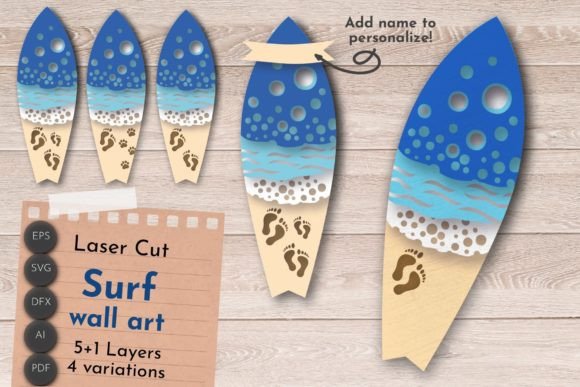
A significant advantage of purchasing comprehensive file packs, such as those offering four variations of a theme, is the flexibility they provide for customization. A single design might not fit every space or style preference. For instance, one variation of the 3D layered surf, sea wave, and flip flop SVG might be a minimalist outline, perfect for painting after cutting. Another might be a fully detailed silhouette intended to show off the natural grain of stained wood.
When evaluating these resources, consider the level of post-processing required. Outline-only files demand more creative input from the user regarding color and finish, which is ideal for those who enjoy painting or staining. Fully segmented files, where every wave curl is a separate piece, reduce the need for painting but increase assembly complexity. The decision often comes down to the maker's available time versus their desire for artistic control. For a busy professional looking for a weekend project, a pre-segmented file with fewer layers might be the pragmatic choice. For a dedicated hobbyist, a complex multi-layer file offers a more rewarding, albeit time-consuming, challenge.
Practical Applications and Placement
Understanding where these designs fit best in a home environment helps in selecting the right scale and material. Coastal-themed layered art is versatile but context-dependent.
- Entryway Statements: Large-scale versions of the 3D layered surf, sea wave, and flip flop SVG work well as focal points in entryways or living rooms. Here, durability is key, suggesting wood or high-quality acrylic.
- Nurseries and Kids' Rooms: Softer materials like painted wood or thick cardstock are appropriate here. The playful nature of flip flops and waves suits a lighter color palette. Safety is a consideration; ensure edges are sanded smooth if using wood.
- Commercial Spaces: Cafes, surf shops, and hotels often utilize these designs for branding. In these high-traffic areas, the finish must be robust. Laminated wood or cast acrylic is recommended to withstand cleaning and environmental changes.
- Gift Items: Smaller iterations make excellent personalized gifts. Adding names or dates to the base layer of a wave design transforms a generic clipart into a bespoke keepsake.
Limitations and Decision Factors
While 3D layered surf, sea wave, and flip flop SVG files are powerful resources, they are not a universal solution. Makers should recognize when an alternative approach is necessary. If the goal is speed and mass production, the assembly time required for layered pieces may be prohibitive. In such cases, a single-layer design with engraved details might yield a similar visual effect with a fraction of the labor.
Additionally, the complexity of the design can strain weaker machines. Older or lower-wattage lasers may struggle with the sheer number of cut paths in a highly detailed layered file, leading to longer run times and potential alignment drift. Similarly, CNC routers with limited axis movement or small bed sizes may require the design to be split into sections, complicating the assembly process.
Cost is another factor. Layered projects consume more material due to the stacking requirement. A design that looks small on the screen might require three times the square footage of material once separated into layers. Budget-conscious makers should calculate material costs before committing to a large batch of layered decor.
Making the Right Choice for Your Workshop
Ultimately, the decision to use 3D layered surf, sea wave, and flip flop SVG files depends on a balance of aesthetic goals, tool capabilities, and available time. These designs shine when the objective is to create depth and texture that flat printing cannot achieve. They are particularly effective for makers who enjoy the process of assembly and finishing as much as the cutting itself.
For those new to layered projects, starting with a simpler variation—perhaps one with fewer layers or larger components—is advisable. This allows for mastery of alignment and gluing techniques before tackling intricate wave crests or detailed flip flop textures. As skills develop, the full potential of these multi-format files can be realized, resulting in professional-grade decor that adds a unique, handcrafted touch to any interior space.
Exploring a diverse range of designs allows creators to build a portfolio that reflects both technical skill and personal style. Whether utilizing a high-end industrial router or a desktop cutter, the availability of versatile formats like AI, SVG, DXF, PDF, and EPS ensures that the barrier to entry is low, while the ceiling for creativity remains exceptionally high. By carefully weighing the tradeoffs between material, machine, and design complexity, makers can confidently select the right resources to bring their coastal visions to life.