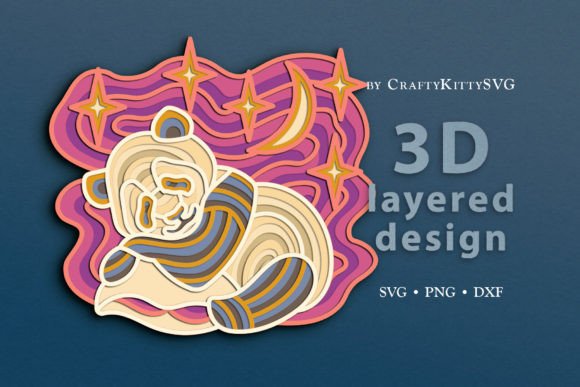
Evaluating the Sleeping Panda 3D Layered SVG Cut File for Multi-Material Projects
For crafters and digital fabricators, the transition from flat, two-dimensional designs to dimensional art often requires a shift in both software strategy and material selection. The Sleeping Panda 3D Layered SVG Cut File represents a specific category of digital assets designed to bridge this gap. Unlike standard silhouette cut files that produce a single-layer sticker or decal, this design utilizes a multi-layered approach to create depth, shadow, and texture. When evaluating whether this specific asset fits your current project pipeline, it is essential to understand not just the aesthetic appeal, but the technical specifications, material compatibility, and licensing constraints that define its utility compared to other available resources.
Understanding the Multi-Layer Architecture
The core distinction of the Sleeping Panda 3D Layered SVG Cut File lies in its construction. This item includes a single zip archive containing a design separated into 10 distinct layers. In the context of digital crafting, layer count is a primary indicator of potential dimensionality. A standard vector image might consist of one path; a complex 3D paper sculpture, however, relies on the precise stacking of multiple paths, each slightly offset or colored differently to simulate lighting and form.
This specific design measures 7.5 inches on its longest side in its default state. While this provides a ready-to-use scale for medium-sized projects, the vector nature of the included SVG and DXF files means the dimensions are fully scalable without loss of resolution. This flexibility is crucial when comparing this file to raster-based images (like standard JPEGs), which pixelate when enlarged. The ability to resize allows the user to adapt the panda motif for anything from a small greeting card embellishment to a larger wall hanging, provided the cutting machine's bed size can accommodate the final dimensions.
File Format Compatibility and Software Integration
When selecting digital templates, file format compatibility is often the deciding factor in workflow efficiency. This package offers three primary formats, each serving a different function within the crafting ecosystem:
- SVG (Scalable Vector Graphics): This is the industry standard for web-based cutting software like Cricut Design Space. It preserves the layer structure, allowing users to manipulate individual segments of the panda design independently. It is also compatible with laser engraving software used by machines like Glowforge, where different colors in the SVG can be mapped to different engraving depths or cut settings.
- DXF (Drawing Exchange Format): Often preferred by users of Silhouette Studio (particularly the free version) and CNC machinery. DXF files are robust for mechanical plotting and ensure that the geometric data remains intact across various CAD and CAM programs.
- PNG (Portable Network Graphics): While not a cut file, the inclusion of a high-resolution PNG is valuable for "print then cut" workflows or for users who wish to visualize the final color scheme before committing materials. It serves as a reference guide for layer arrangement.
The presence of all three formats in a single download eliminates the need to convert files manually, a process that can sometimes introduce errors in node alignment or layer separation. For professionals managing tight deadlines, this immediacy adds tangible value.
Material Versatility: Beyond Paper Crafting
A significant advantage of the Sleeping Panda 3D Layered SVG Cut File is its adaptability across diverse substrates. While many layered designs are optimized exclusively for cardstock, the clean vector paths in this file make it suitable for a broader range of materials. The design logic supports cutting and engraving on:
- Paper and Cardstock: The most common application. By using varying shades of the same color or contrasting tones, crafters can achieve a shadow-box effect. The 10-layer depth allows for significant elevation, making the panda appear to pop off the page.
- Wood and Plywood: Laser cutters can utilize these files to create wooden signs or ornaments. The layering allows for stained or painted accents between cuts, adding rustic charm.
- Acrylic and Plexiglas: For a modern, sleek look, clear or colored acrylic sheets can be stacked. The transparency of the material interacts with the layered cuts to create unique light-refracting effects.
- MDF and Metal: Thicker materials like Medium Density Fiberboard or thin gauge metals require precise pathing to avoid burning or warping. The vector precision of the DXF and SVG files ensures that intricate details, such as the panda's facial features, remain sharp even in harder materials.
It is important to note that while the file is compatible with these materials, the user must adjust their machine settings accordingly. A setting that works perfectly for 65lb cardstock will likely burn through thin plywood or fail to cut through acrylic. The file provides the geometry; the operator provides the technical execution.
Comparative Analysis: Pre-Made Templates vs. Custom Design
When deciding whether to purchase a pre-made template like the Sleeping Panda 3D Layered SVG Cut File or to design a similar asset from scratch, several trade-offs emerge. Creating a 10-layer 3D design manually requires advanced proficiency in vector illustration software (such as Adobe Illustrator or Inkscape). The designer must calculate offset distances, ensure bridges and connections are strong enough to hold the layers together, and manage complex grouping structures.
For hobbyists or small business owners whose primary focus is production rather than illustration, purchasing a tested template offers immediate reliability. The design has theoretically been vetted for cuttability, meaning the paths are closed, and nodes are optimized to prevent machine stuttering. However, the limitation lies in customization. While you can change colors and sizes, the fundamental shape and layer arrangement are fixed. If a project requires a specific pose or a non-standard number of layers to fit a unique frame depth, a custom design might be necessary despite the higher time investment.
Furthermore, compared to single-layer SVGs, 3D layered files demand more assembly time. A flat decal takes seconds to weed and apply; a 10-layer panda requires careful gluing, spacing, and alignment. Users must weigh the visual impact of the 3D result against the labor hours required for assembly. For high-volume production runs, this assembly time can become a bottleneck, whereas for boutique, high-margin items, the added dimension justifies the extra effort.
Licensing and Commercial Considerations
A critical aspect of evaluating any digital asset is understanding the Terms of Use. The licensing for this specific design adheres to standard industry practices regarding "Physical End Products." This means purchasers are granted the right to use the files to create tangible goods for sale, such as finished greeting cards, framed art, or decorative signs.
However, strict prohibitions exist to protect the intellectual property of the creator, CraftyKittySVG. Users are not allowed to:
- Resell the digital source files (SVG, DXF, PNG) in their original or modified form.
- Share the files in a manner that allows others to download or extract them, such as in "freebie" bundles or shared drives.
- Create directly competitive digital products that mimic the original design's structure.
This distinction is vital for entrepreneurs. You are buying the right to manufacture the object, not the right to distribute the tool used to make it. Violating these terms can lead to account bans on marketplaces or legal repercussions. When comparing this to "Commercial Use" licenses that might allow for sub-licensing or unlimited digital distribution, this template is more restrictive, which is typical for independent artists selling on platforms like Etsy or Creative Fabrica.
Decision Factors: Is This Template Right for Your Project?
Determining whether the Sleeping Panda 3D Layered SVG Cut File is the optimal choice depends on your specific goals, equipment, and skill level. This resource is likely the right choice if:
- You own a cutting machine (Cricut, Silhouette, Glowforge) capable of handling multiple passes or layers.
- You are looking to create dimensional decor, nursery art, or intricate greeting cards.
- You prefer working with established, error-free vector paths rather than troubleshooting self-drawn lines.
- Your business model focuses on selling physical handmade goods rather than digital downloads.
Conversely, you may need to seek an alternative if:
- You require a fully editable source file to fundamentally alter the character's anatomy or pose.
- Your workflow relies on single-pass cutting for high-speed mass production where assembly time is a constraint.
- You intend to resell the digital file itself or include it in a subscription box of digital assets.
- You lack the patience for the meticulous alignment required in 10-layer assembly projects.
In conclusion, the Sleeping Panda 3D Layered SVG Cut File serves as a robust middle-ground solution for crafters seeking professional-grade dimensionality without the steep learning curve of custom vector design. Its strength lies in its versatility across materials and its comprehensive file format support. However, success with this template relies heavily on the user's ability to manage multi-material workflows and adhere to strict licensing boundaries. By carefully weighing the assembly requirements against the desired aesthetic outcome, creators can determine if this layered approach aligns with their current production capabilities.