Fairy in the Woodland 3D Shadow Box Design
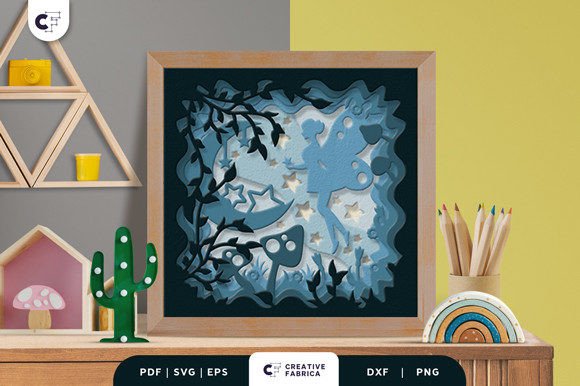
Imagine capturing a fleeting moment of magic: a fairy clutching her wand amidst a purplish midnight atmosphere, surrounded by the silent whisper of tree branches and the glow of distant stars. This is the essence of the Fairy in the Woodland 3D Shadow Box. It is not merely a static image but a layered experience that brings depth to flat materials. At its core, this project utilizes seven distinct layers of paper to create a stunning work of art, transforming intricate vectors into a tangible scene inspired by fabled forest creatures. Whether you are holding the physical framed piece or working with the digital files to create your own, the result is a brilliant hue of spring life frozen in a nocturnal setting.
The appeal of this specific design lies in its versatility. While the visual outcome is a cohesive story of a forest at midnight, the value proposition shifts dramatically depending on who is interacting with it. For some, it is a finished decoration; for others, it is a raw material for commerce or education. Understanding these different perspectives helps clarify why a single design file can serve such a wide array of needs.
The Creator's Canvas: Flexibility and Format
For digital creators and hobbyists, the primary attraction of the Fairy in the Woodland 3D Shadow Box is the flexibility offered by its file formats. The design is available in SVG, PDF, EPS, PNG, and DXF. This variety is crucial because it removes technical barriers. A user with a basic home printer might rely on the PDF for immediate printing and hand-cutting, appreciating the precision of the vectors without needing expensive software. Conversely, a professional with a laser cutter or Cricut machine will find the SVG and DXF files indispensable for automating the cutting process across those seven complex layers.
The intricacy of the background, featuring mushrooms, stars, and winding branches, presents a satisfying challenge. Experienced crafters often look for projects that test their patience and assembly skills. The requirement to align seven layers perfectly demands attention to detail, turning the assembly process into a meditative practice. For these individuals, the "ease of use" is less about speed and more about the reliability of the cut lines and the clarity of the assembly guide. If the vectors are clean, the time spent weeding excess paper is minimized, allowing the creator to focus on the artistic arrangement of the purplish atmosphere and the fairy's wings.
Commercial Viability for Small Business Owners
Entrepreneurs and small business owners evaluate the Fairy in the Woodland 3D Shadow Box through a different lens: commercial value and production speed. In the world of handmade goods, consistency is key. A design that uses standard dimensions, such as the 20.32×20.32 cm size provided here, fits perfectly into pre-made frames, streamlining the packaging and shipping process. This standardization reduces waste and lowers overhead costs.
Furthermore, the choice of material plays a significant role in the final product's marketability. The design is optimized for Encore Cardstock 80 lb cover (216 gsm). For a business owner, this specification is vital information. It ensures that the paper is heavy enough to hold its shape between layers without sagging, yet thin enough to allow light to pass through if backlit. A seller can confidently market the durability and premium feel of the shadow box, knowing the design was engineered for this specific weight class. The ability to produce multiple units quickly using the DXF or SVG files allows for scalability, turning a single artistic concept into a viable inventory item for spring collections or fantasy-themed decor shops.
Educational and Therapeutic Applications
Educators and therapists may find unique utility in this project that goes beyond aesthetics. The Fairy in the Woodland 3D Shadow Box serves as an excellent tool for teaching spatial reasoning and fine motor skills. For students or clients working on hand-eye coordination, the act of layering paper to create depth provides a concrete lesson in perspective. They can physically see how placing an object closer to the "viewer" (the front glass) changes its relationship with the background elements like the fairytale trees.
Additionally, the thematic content offers a gentle entry point for storytelling. The midnight setting, with its stars and mystical fairy, can inspire creative writing prompts or discussions about folklore. Unlike high-stress environments, crafting this shadow box allows for a slow, deliberate pace. The repetitive nature of cutting and gluing seven layers can be grounding, making it a suitable activity for stress relief or mindfulness sessions. Here, the priority is not the speed of production but the learning value and the therapeutic quality of the process.
Considerations for the Home Decorator
For the consumer or interior design enthusiast, the decision to acquire this design often hinges on presentation and emotional resonance. The "Midnight Fairy" theme brings a specific mood to a room—a blend of whimsy and serenity. The purplish atmosphere mentioned in the design description suggests a color palette that complements modern bohemian or eclectic interiors. These users are less concerned with file extensions and more focused on the final visual impact.
They want to know if the colors will pop and if the shadows cast by the seven layers will create the desired drama. The use of high-quality cardstock ensures that the hues remain vibrant and do not fade quickly under indoor lighting. For a homeowner, this shadow box is a conversation starter, a piece of art that reflects a love for nature and fantasy without being overly childish. It bridges the gap between a child's storybook and sophisticated wall art.
Making the Right Choice for Your Goals
Ultimately, determining whether the Fairy in the Woodland 3D Shadow Box is right for you depends on aligning the project's features with your specific objectives.
- Beginners: If you are new to paper crafting, start with the PDF version. Print it on the recommended 80 lb cardstock and take your time assembling the seven layers. Focus on learning how spacing affects depth.
- Professionals: Leverage the SVG and EPS files to integrate this design into a larger collection. Test different cardstock textures to see how they interact with the intricate vector details of the fairy's wings and the forest floor.
- Business Owners: Calculate your material costs based on the 216 gsm requirement. Consider offering customization options, such as changing the background color to shift the mood from midnight to dawn, while keeping the core vector structure intact.
- Educators: Use the project to demonstrate layers in storytelling or geography (elevation), using the physical depth of the box as a teaching aid.
The beauty of this project is that it scales with your ambition. It can be a quiet weekend activity or the foundation of a small product line. The intricate vectors of the mushrooms and stars remain constant, but the way you engage with them transforms the outcome. By selecting the appropriate format and understanding the material requirements, you ensure that the final piece honors the original vision of a fairy in the forest at midnight.
When you are ready to begin your creation, ensuring you have the right materials is the first step toward success. Using the correct weight of paper is essential for the structural integrity of the seven layers. You can source the recommended Encore Cardstock 80 lb cover to guarantee your shadow box stands the test of time. Whether you are framing it for your home or selling it to a customer, the quality of your materials will always reflect in the final presentation.