Crafting Connection: A Practical Guide to the Mama and Baby Fox 3D Shadow Box
For crafters and gift-givers navigating the vast landscape of handmade presents, finding a project that balances emotional resonance with technical feasibility is often the primary challenge. The Mama and Baby Fox 3D Shadow Box has emerged as a compelling option in the papercutting community, particularly for those seeking a meaningful tribute for Mother's Day or a nursery decoration. Unlike flat prints or standard greeting cards, this specific design utilizes layered depth to create a tangible sense of intimacy between the subjects. Understanding what makes this project distinct, how it compares to other crafting formats, and whether it aligns with your current skill set and resources is essential before committing to the cut.
Defining the Project: Structure and Aesthetic Appeal
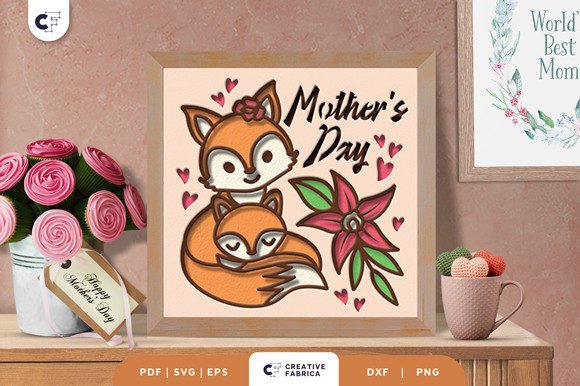
At its core, the Mama and Baby Fox 3D Shadow Box is a multi-layered paper art piece designed to be assembled within a deep-frame enclosure. The design typically features bold typography paired with decorative animal vectors, depicting an adult fox and a kit in a pose that suggests protection and affection. What sets this apart from generic wildlife illustrations is the intentional use of negative space and layering to simulate a three-dimensional environment. The standard configuration involves approximately seven to nine distinct layers of cardstock, each contributing to the overall depth and shadow play when light hits the frame.
The aesthetic relies heavily on the contrast between the layers. When executed correctly, the foreground elements appear to float above the background, creating a diorama effect that changes slightly depending on the viewing angle. This dynamic quality is something static images cannot replicate. The inclusion of a heartfelt message or bold font integrated into the layers adds a typographic element that anchors the visual narrative, making it suitable not just as wall art, but as a standalone statement piece for a shelf or mantel.
Evaluating Formats: Digital Files vs. Pre-Made Kits
One of the first decisions a creator faces is whether to purchase a pre-assembled kit or digital cutting files. The Mama and Baby Fox 3D Shadow Box is widely available in digital formats such as SVG, PDF, EPS, PNG, and DXF. This versatility is a significant advantage for users who already own cutting machines like Cricut or Silhouette, or those who prefer hand-cutting with precision knives.
Opting for the digital file route offers greater customization. You have full control over the color palette, allowing you to match existing room decor or personal preferences rather than being limited to a manufacturer's chosen scheme. Furthermore, digital files are generally more cost-effective per unit if you plan to make multiple gifts. However, this approach requires access to specific hardware or steady hand skills and a supply of high-quality cardstock.
In contrast, pre-made kits remove the technical barrier of sourcing materials and sizing but limit creative flexibility. For the Mama and Baby Fox design, many enthusiasts prefer the digital route because the emotional impact is often heightened when the creator selects the specific shades of orange, cream, or forest green that hold personal meaning to the recipient. The ability to scale the project is another benefit of digital files; while the standard size is often around 20.32×20.32 cm (8x8 inches), SVG and EPS formats allow for resizing to fit larger frames if desired, provided the intricate details remain cuttable at the new scale.
Material Considerations and Structural Integrity
The success of any 3D shadow box hinges on the material used. For a project with seven or more layers, the weight and rigidity of the paper are critical. Standard printer paper is insufficient as it will warp and fail to hold the structural spacing required for the 3D effect. The industry standard for this type of project is 80 lb cover (216 gsm) cardstock, such as Encore Cardstock.
This specific weight provides the necessary stiffness to maintain the gaps between layers without sagging over time, yet it remains thin enough to be cut cleanly by most consumer-grade die-cutting machines. Using lighter paper may result in a flattened appearance where the layers collapse against one another, defeating the purpose of the shadow box. Conversely, using paper that is too thick can make assembly difficult, especially when adhering the small, intricate tabs that hold the layers apart. It is also important to note that the final color perception can vary based on the lighting source and the specific finish of the paper—matte finishes tend to absorb light softly, enhancing the shadow effect, while glossy finishes might introduce unwanted reflections.
Comparative Analysis: Shadow Boxes vs. Alternative Gift Formats
When evaluating the Mama and Baby Fox 3D Shadow Box against other gifting options, several tradeoffs become apparent. Compared to a framed photograph, the shadow box offers a stylized, artistic interpretation rather than a literal representation. This makes it an excellent choice for those who want to convey a feeling or theme—such as maternal love—without the pressure of selecting the "perfect" photo. It serves as a symbolic gesture rather than a documentary one.
Relative to store-bought decor, a handmade shadow box carries a significantly higher perceived value due to the labor involved. However, the time investment is non-trivial. Assembling nine precise layers requires patience and attention to detail. For individuals with limited time or those who struggle with fine motor tasks, a simpler alternative like a printed canvas or a pre-framed illustration might be more practical. The shadow box is best suited for creators who enjoy the process of assembly as much as the final result.
Furthermore, compared to other papercraft projects like pop-up cards, the shadow box is a permanent display item. Pop-up cards are interactive but transient; they are opened, admired, and then stored away. The Mama and Baby Fox Shadow Box is designed for continuous display, making it a more substantial addition to a home's interior design. This permanence justifies the higher material costs and assembly time for many crafters.
Decision Factors: Is This Project Right for You?
Determining whether to proceed with the Mama and Baby Fox 3D Shadow Box involves assessing your specific context. This project is an ideal fit if:
- You have access to a cutting machine or possess advanced hand-cutting skills.
- You are comfortable working with adhesive spacers and aligning multiple layers precisely.
- The recipient appreciates handmade, textured art over traditional photography.
- You have a budget for quality cardstock and a deep-frame shadow box enclosure.
However, you might consider alternative options if you are looking for a last-minute gift, as the sourcing of materials and assembly time can extend over several days. Additionally, if the intended display area has very low light, the nuanced shadows that define this art form may be lost, reducing its visual impact. In dimly lit rooms, a backlit version or a flat print with high-contrast colors might serve the space better.
Assembly Insights and Best Practices
For those who decide to move forward, the assembly process is where the magic happens. The typical workflow involves cutting all layers, organizing them in sequence, and applying adhesive foam squares or specialized paper spacers between each tier. Consistency in spacer height is crucial; uneven spacing can distort the perspective and make the image look tilted. Many crafters recommend doing a "dry fit" of all nine pieces before applying any glue to ensure the alignment of the fox vectors and text is perfect.
Lighting plays a subtle but powerful role in the final presentation. Placing the finished shadow box where it can catch natural daylight or a directed lamp will accentuate the depth of the cutouts. The interplay of light and shadow is what transforms the flat cardstock into a living scene. Remember that the preview images seen online are often digitally enhanced; the actual product will depend heavily on your choice of paper color and the ambient lighting of the room where it is displayed.
Ultimately, the Mama and Baby Fox 3D Shadow Box represents a intersection of technical craft and emotional storytelling. It is not merely a decoration but a constructed memory, built layer by layer. By understanding the material requirements, format options, and spatial considerations, you can make an informed decision on whether this intricate project is the right vessel for your message of love and appreciation.