Bringing the Farm to Life: A Guide to Crafting the Cartoonish Calf 3D Shadow Box
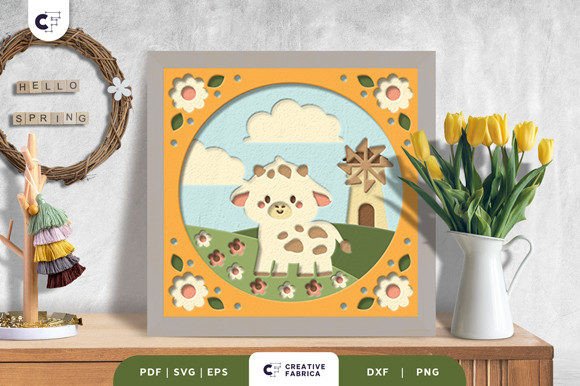
The intersection of traditional paper crafting and modern digital design has opened up a world of possibilities for creators, educators, and home decor enthusiasts. Among the most charming trends in this space is the creation of layered paper art, specifically designs that capture whimsical scenes with depth and texture. One standout example in this genre is the Cartoonish Calf 3D Shadow Box Paper Cut. This specific design, often featuring a baby calf alongside rustic elements like a windmill, represents more than just a cut-out image; it is a lesson in spatial reasoning, material selection, and aesthetic composition. Whether you are a professional crafter looking to expand your product line or a parent seeking a unique nursery project, understanding the intricacies of this craft can elevate your final result from a simple hobby project to a piece of framed art.
The Art of Dimensionality in Paper Crafting
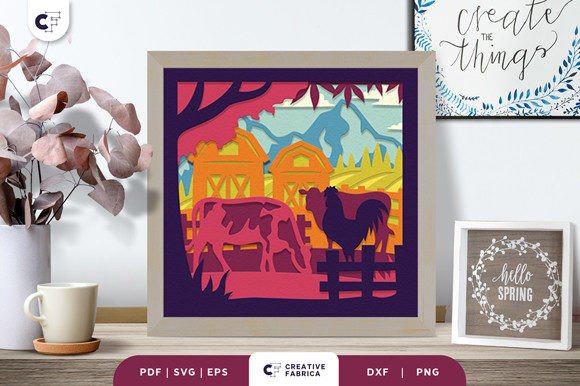
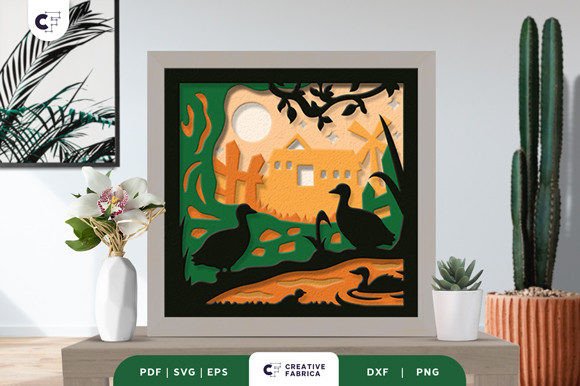
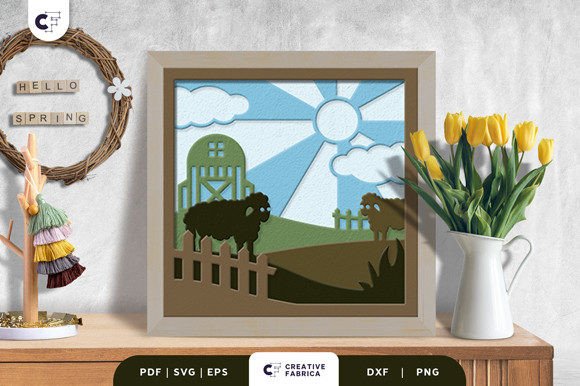
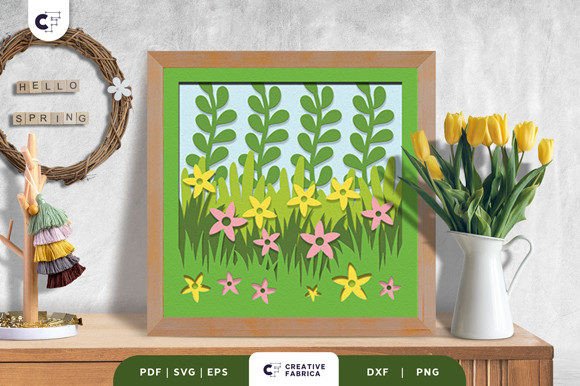
At its core, a shadow box relies on the manipulation of light and shadow to create an illusion of three-dimensionality on a two-dimensional plane. The Cartoonish Calf 3D Shadow Box Paper Cut typically utilizes nine distinct layers to achieve this effect. Each layer serves a specific purpose, acting as a building block that adds depth to the scene. The front-most layer usually contains the finest details, such as the facial features of the calf or the blades of the windmill, while the rear layers provide the background context and atmospheric perspective.
When assembling a nine-layer design, the spacing between each sheet of cardstock becomes critical. In professional applications, crafters often use foam adhesive squares or rolled paper tabs to separate the layers. This separation allows light to cast soft shadows between the tiers, enhancing the perception of depth. For the baby calf design, this technique is particularly effective in separating the subject from the background elements, making the animal appear to pop out of the frame. The result is a tactile visual experience that changes as the viewer moves around the piece, a quality that flat prints simply cannot replicate.
Selecting the Right Materials for Durability and Finish
The success of any layered paper project hinges on the quality of the substrate used. While standard printer paper might suffice for a quick prototype, it lacks the structural integrity required for a lasting display. For a project of this nature, utilizing heavy-weight cover stock is essential. Specifically, 80 lb cover (216 gsm) cardstock is widely regarded as the industry standard for shadow boxes. This weight provides enough rigidity to prevent warping over time while remaining pliable enough for intricate cutting machines to handle without tearing.
One popular choice among serious hobbyists and professionals is Encore Cardstock. This brand is known for its consistent thickness and vibrant color retention, which are crucial when working with multiple layers where color variation can distract from the overall image. When sourcing materials, visiting a dedicated 12×12 Cardstock Shop ensures that you have access to the full spectrum of colors needed to bring the rustic farm scene to life. Using high-quality paper also ensures that the edges of the cuts remain crisp, preventing the fuzzy appearance that can occur with lower-grade fibers.
Digital Formats and Workflow Integration
In the modern crafting ecosystem, the physical creation is only half the process; the digital file preparation is equally vital. The Cartoonish Calf 3D Shadow Box Paper Cut is rarely a single image file. Instead, it is distributed as a suite of digital formats designed to integrate seamlessly with various cutting machines and design software. Understanding these formats allows creators to choose the best workflow for their specific equipment.
- SVG (Scalable Vector Graphics): This is the preferred format for users of electronic cutting machines like Cricut or Silhouette. SVG files retain vector data, allowing the design to be resized infinitely without losing resolution. This is ideal for adjusting the Cartoonish Calf design to fit different frame sizes.
- PDF (Portable Document Format): Often used for manual cutting or printing templates, PDFs ensure that the layout remains fixed regardless of the device used to open them. They are excellent for educators who need to print consistent copies for a classroom setting.
- EPS (Encapsulated PostScript): A staple for professional graphic designers using Adobe Illustrator or CorelDRAW. EPS files allow for deep customization of individual nodes and paths before sending the design to a cutter.
- PNG (Portable Network Graphics): While not a cut file itself, high-resolution PNGs are often included for preview purposes or for those who wish to print the layers directly onto pre-colored cardstock without tracing.
- DXF (Drawing Exchange Format): Compatible with a wide range of CAD software and older cutting machines, DXF ensures broad accessibility for users with diverse technical setups.
Having access to this variety of formats means that the barrier to entry is low. A teacher can use the PDF for a hand-cutting lesson on fine motor skills, while a small business owner can use the SVG to mass-produce decorations for a boutique. The flexibility of these file types supports a wide array of creative workflows.
Practical Applications Beyond Home Decor
While the primary appeal of the Baby Calf with Windmill design is its suitability for nursery decor and rustic home aesthetics, its utility extends far beyond hanging a picture on a wall. The modular nature of the nine-layer system makes it an exceptional tool for educational purposes. In a classroom setting, assembling a 3D paper cut can serve as a practical exercise in sequencing and following complex instructions. Students must identify the correct order of layers, understand the concept of foreground and background, and execute precise assembly techniques.
Furthermore, this design serves as a versatile asset for event planning and commercial displays. For baby showers, a large-scale version of the Cartoonish Calf 3D Shadow Box Paper Cut can act as a stunning centerpiece or a photo backdrop. Its neutral and heartwarming themes appeal to a broad audience, avoiding overly gendered colors while maintaining a soft, inviting atmosphere. Retailers specializing in children's goods often utilize similar shadow box aesthetics in window displays to draw the eye and create a sense of whimsy that encourages foot traffic.
Technical Considerations for Assembly
Creating a flawless shadow box requires attention to technical details that go beyond simply stacking paper. The dimensions of the project, typically around 20.32 × 20.32 cm (approximately 8x8 inches), dictate the scale of the frame and the precision required for cutting. When working with nine layers, registration becomes a key challenge. Each layer must align perfectly with the one beneath it; even a millimeter of misalignment can disrupt the visual continuity of the calf's outline or the windmill's structure.
To mitigate alignment issues, experienced crafters often employ registration marks included in the digital files. These small targets outside the cut area help ensure that the machine cuts every layer in the exact same position relative to the mat. Additionally, the choice of adhesive matters. Double-sided tape can sometimes cause buckling if applied unevenly, whereas foam dots provide consistent spacing but require careful placement to remain hidden. The goal is to make the mechanics of the assembly invisible, allowing the viewer to focus solely on the artistic output.
The Role of Color Theory in Layered Designs
An often-overlooked aspect of 3D paper cutting is the strategic use of color to enhance depth. In a monochromatic scheme, darker shades are typically reserved for the bottom layers to simulate distance, while lighter, brighter colors are used for the top layers to suggest proximity and illumination. However, the Cartoonish Calf design often employs a more illustrative approach, using distinct colors for different elements—the green of the grass, the blue of the sky, and the warm tones of the calf.
When selecting cardstock colors, creators should consider the lighting conditions where the final piece will be displayed. Natural light will interact differently with the textured edges of the paper compared to artificial indoor lighting. Testing a small section of the layers under the intended lighting can prevent surprises after the entire piece is assembled. This level of foresight distinguishes a amateur craft from a professional-grade installation.
Expanding Creative Horizons
The Cartoonish Calf 3D Shadow Box Paper Cut is not merely a static product but a starting point for further creativity. Once a creator masters the assembly of the standard nine-layer design, they can begin to experiment with modifications. This might involve adding embellishments like glitter, altering the color palette to match specific seasonal themes, or even integrating LED strip lighting behind the back layer to create a backlit effect. Such innovations can transform a standard paper cut into a dynamic light box, suitable for evening ambiance or specialized photography.
For researchers and historians interested in folk art, the revival of paper cutting through digital means offers a fascinating case study in how technology preserves and evolves traditional crafts. The ability to distribute complex patterns globally via digital downloads democratizes access to art forms that were once restricted to specific geographic regions or master artisans. The windmill and calf motif, rooted in pastoral traditions, finds new life through the precision of laser cutters and digital plotters, bridging the gap between heritage and modernity.
Ultimately, the value of this craft lies in its versatility and the joy it brings to both the maker and the observer. Whether utilized as a heartfelt gift for a new parent, a decorative element in a child's bedroom, or a teaching aid in an art studio, the layered paper cut stands as a testament to the enduring power of paper as a medium. By combining high-quality materials like 80 lb cover stock with precise digital files, creators can produce works that are not only visually striking but also emotionally resonant. As the crafting community continues to grow, designs like the baby calf with windmill remind us that sometimes the most impactful art is created from the simplest of materials, layered with care and imagination.